Logo
  • About EFFOP
    • The voice of the European producers
    • Governance
    • Members
    • Representation and Partnership
    • Secretariat
  • Responsible Sourcing
    • Raw materials
    • Management of fish stocks
    • Annual TAC & Quota overview
    • Our Industry Standard
  • The European Industry
    • Fishmeal and Fish Oil
    • The European supply
    • Certification Standards
    • Nutrition & Environment
    • Use of marine nutrients
  • EFFOP Commitment
    • Our Sustainable Development Goals
    • EU Code of Conduct
    • IFFO Standard
    • Policy Papers
  • Associated Members
  • Fact Sheet
    • Fact Sheet
  • News & Events
    • News & Events
    • Publications
    • EFFOP Events
    • News from our Members
    • Projects
  • Members Page
    • Welcome
    • Events and Presentations
    • Technical
    • EU Updates
    • Governance
    • Photos
Generic selectors
Exact matches only
Search in title
Search in content
Post Type Selectors

  • Posts

Workshop on “Danish solutions on pelagic bulk landings”

On Friday 21st April,  “The Danish Solution on Pelagic Bulk Landings” took place at MID. The purpose of the event was to to discuss the handling of weighing and requirements of species sorting regarding landings and deliveries to Danish fishmeal and fish oil factories. The event had a diverse range of speakers who shared their knowledge and experiences in the industry. The event started with Anne Mette Bæk, the managing director of Marine Ingredients Denmark,…

Exploring the energy transition in the pelagic sector

On 20 April, the Pelagic Advisory Council organize an online workshop on Energy transition in the pelagic fisheries sector. With this workshop, the Pelagic AC aims to gather knowledge on the state of play regarding energy efficiency in the pelagic fleet, as well as explore the possibilities to implement adaptions and alternative fuels onboard pelagic vessels. Ultimately, the workshop will form a basis for future discussions at the Pelagic AC to advise the Commission and…

Workshop on ecosystem-based approach to fisheries management

EFFOP is partner of the Ecosystem Focus Group of the Pelagic Advisory Council and joined its recent workshop on ecosystem-based approach to fisheries management exploring the application of an ecosystem–based approach to the management of small pelagic stocks in the Northeast Atlantic. The background for the workshop is the EU Commen Fisheries Policy – Regulation (EC) 1380/2013, Article 2.3: 3. The CFP shall implement the ecosystem-based approach to fisheries…

Measures to improve the sustainability and resilience of the EU’s fisheries and aquaculture sector

On 21 February, the European Commission published a “package of measures to improve the sustainability and resilience of the EU’s fisheries and aquaculture sector”. The main objectives of the measures are to promote the use of cleaner energy sources and reduce dependency on fossil fuels as well as reduce the sector’s impact on marine ecosystems. The proposed actions will be carried out gradually to help the sector adapt. Full press release is available here.…

Consultant for political work wanted

Are you ready to play a key role in a small and efficient team? Marine Ingredients offers a position which gives you the opportunity for personal and professional development. Your contribution is important to the industry, and you will feel that you will quickly gain independent responsibility and can make a difference. With reference to the CEO, you play a central role in promoting the members’ interests. As a consultant, you have a significant role in creating relationships…

The International Symposium on Small Pelagic Fish 2022

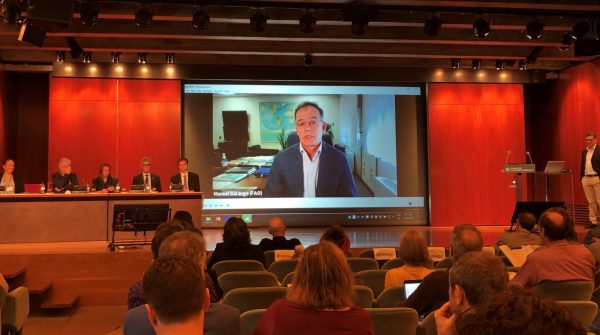
EFFOP participated in the International Symposium: “Small Pelagic Fish: New Frontiers in Science for Sustainable Management”. Manuel Barange, Director of the Fisheries and Aquaculture Division at FAO, gave an opening talk at the Small Pelagic Fish symposium in Lisbon. Important challenges addressed  were, among others, food security, climate impact, social sustainability. The Symposium was well organized and gave a good overview of the science state of the art in…

Are plant fed fish more sustainable?

A new article entitled “Time to rethink trophic levels in aquaculture policy” reviews the use of trophic levels as indicator for sustainability in aquaculture policy . The trophic level is an indicator for an animals energy-wise placement in the food chain. In general plant eating fishes are at low trophic levels (<2.5) whereas carnivour fishes are at high trophic levels (>2.5). The aquaculture policy considers the low trophic level fishes more sustainable…

Key points discussed at the Mini-Symposium on Optimization of Sustainable Fisheries in Copenhagen

European Fishmeal is partner in the MSE project and co-hosted a scientific mini-symposium on “Optimizing Sustainable Fishing on Rebuilt Fish Stocks” on 23 November 2022. The symposium programme is available here. The presentations given can be found here and a short resume of the event is given here. Fish stocks in the North Atlantic are rebuilding and they compete for food and predate on each other and it is time to revisit what the optimal fishing pressure is. The technical…

Update on the European supply perspective 2023

At the 60th Annual IFFO Conference 23–27 October in Lima, Peru, Anne Mette Bæk, Managing Director of EFFOP, presented an update on the European supply perspective 2023 on behalf of EFFOP. See the presentation here. On average in the period 2017-2021, the European producers produced 575.000 tonnes of fishmeal and 170.000 tonnes of fish oil based on a raw material intake of 2.860.000 tonnes. However, in 2021 European producers only received 2.400.000 tonnes of raw material…

Production of marine ingredients depends increasingly on by-products

Fishmeal and fish oil (marine ingredients) is mainly used in aquafeeds for the aquaculture industry. As production from aquaculture has increased while fishmeal and fish oil output has remained within certain limits, the share of these ingredients in aquafeed has been steadily declining, To discuss these and other developments in the marine ingredients industry, SeafoodSource organised a webinar on 31 August 2022. The latest issue of the EUROFISH Magazine brings an article…

NWWAC/PelAC advice on the impacts of underwater noise and offshore wind energy developments on commercial fisheries

In order for the European Union to meet its climate objectives of decarbonising the entire economy and become climate neutral by 2050, there is a need to move away from fossil fuels and towards greener energy such as wind, solar and hydropower. The revised Renewable Energy Directive 2009/28/EC took effect on 01 July 2021 and requires that at least 32% of all energy consumed in the EU is from renewable energy sources by 2030 (link). On both the European and the international level…

Invitation to mini-exhibition of innovations for future fisheries

The SMARTFISH H2020 project invites to attend a mini-exhibition of technologies that have been developed to ensure the future sustainability of fisheries. Some of the groundbreaking innovations for observing and quantifying the fishing process, both pre- and post-catch, such as the CatchScanner, CatchMonitor, CatchSnap, NephropsScan, TrawlMonitor and more will be presented. The mini-exhibition takes place in Brussels on 22 November 2022. For more information and…

The Pelagic AC recommendations for fishing possibilities for 2023

The Pelagic Advisory Council has published its recommendations for fisheries and TACs for a number of fish stocks in North Atlantic Seas in 2023. The Pelagic AC recommendations can be read in full in a letter to the EU Commission: https://www.pelagic-ac.org/advice-recommendations/ Blue whiting: The Pelagic AC recommends following the ICES advice and setting a TAC for 2023 that does not exceed 1 359 629 tonnes. Atlanto-Scandian herring : The Pelagic AC recommends following…

11% of the North-East Atlantic is now protected

The OSPAR Commission announced 5 October that its network of North-East Atlantic Marine Protected Areas (MPA) now comprises 583 MPAs covering a surface area of 1.5 million km2 or 11% of the North-East Atlantic. This means that OSPAR has achieved Aichi Biodiversity target 11 of the United Nations Convention on Biological Diversity. Read the report here …

Invitation: Seminar on Ecosystem-Based Fisheries Management in the Northeast Atlantic (19 October)

Sciaena, in partnership with The Pew Charitable Trusts, is pleased to invite you to an in-person seminar in London entitled “Ecosystem-Based Fisheries Management in the Northeast Atlantic – Ensuring thriving marine life and resilient fisheries”. Scientists, stakeholders, and managers will discuss the importance of adopting ecosystem-based management approaches, recent progress made in the northeast Atlantic, and next steps needed for fisheries managers…
Report on EFFOP 2022 Biennial

EUROFISH Magazine August 2022 edition In its August 2022 issue, the Eurofish magazine published an extended article on the EFFOP 2022 Biennial which took place in Skagen just before the summer break. The article focused on topics such as the supply of fishmeal and oil in relation to the projected growth in aquaculture, the relatively low GHG emission levels of fishmeal and fish oil, the correlation between climate change impacts and traceability and how the industry works…

A call for adaptive, flexible and well informed fisheries management

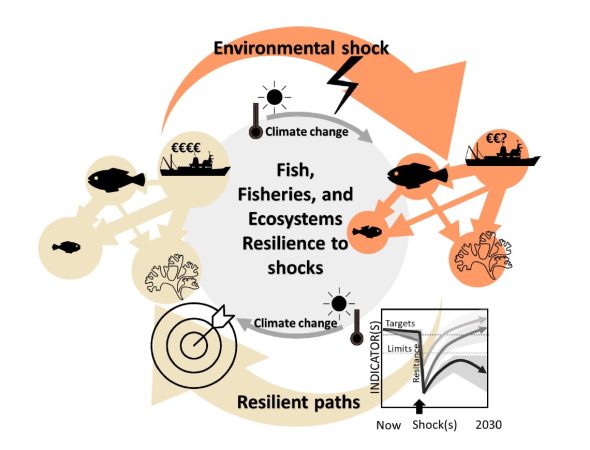
Ten lessons on the resilience of the EU common fisheries policy towards climate change and fuel efficiency A new study by a group of fisheries research scientists shows that European Union (EU) fisheries are likely resilient to climate-driven shortterm stresses, but may be negatively impacted by long-term trends in climate change. Fisheries’ long-term stock resilience can be improved (and therefore be more resilient to increasing changes in climate) by adopting robust…

Economic Report on the Fish Processing Industry (STECF)

…

The State of World Fisheries and Aquaculture (SOFIA) 2022

The 2022 edition of The State of World Fisheries and Aquaculture coincides with the launch of the Decade of Action to deliver the Global Goals, the United Nations Decade of Ocean Science for Sustainable Development and the United Nations Decade on Ecosystem Restoration. It presents how these and other equally important United Nations events, such as the International Year of Artisanal Fisheries and Aquaculture (IYAFA 2022), are being integrated and supported through Blue…

Implementation of an Ecosystem Approach to Fisheries Management

On 24th June, the EFFOP secretariat participated in the Fisheries Science Seminar on 24 June 2022 organized by the European Commission’s Directorate-General for Maritime Affairs and Fisheries (DG MARE). The focus of the seminar (webinar) was on “Implementation of an Ecosystem Approach to Fisheries Management (EAFM)”. In the current context of rapid climate and ocean changes, but also of increasing awareness about a wide range of various human impacts on…

EFFOP – Marine Nutrients Europe

Vester Farimagsgade 3, 1.

1606 Copenhagen V

Denmark

CVR: 37555738

TRN: 783980638121-41

+45 33 14 58 00
effop@maring.org
Follow us on Twitter
Follow us on LinkedIn

Contact
Links
Privacy Policy

Sign up for EFFOP’s newsletter

We use cookies to improve your user experience.
You can revoke your consent any time using the Revoke consent button.