Responsible Sourcing
TACs and Quotas
Annual Quota Summary: Industrial and By-Product Species
Annual catch limits for industrial species and by-products are set each year through the EU quota-setting process, informed by ICES scientific advice and regional negotiations for shared stocks. These quotas determine the total allowable catches (TACs) for key species used in fishmeal and fish oil production—such as sandeel, sprat, blue whiting, and Norway pout—as well as the by-products derived from herring, mackerel, and tuna processing. The allocation of national quotas reflects both biological considerations and long-standing management frameworks within the Common Fisheries Policy.
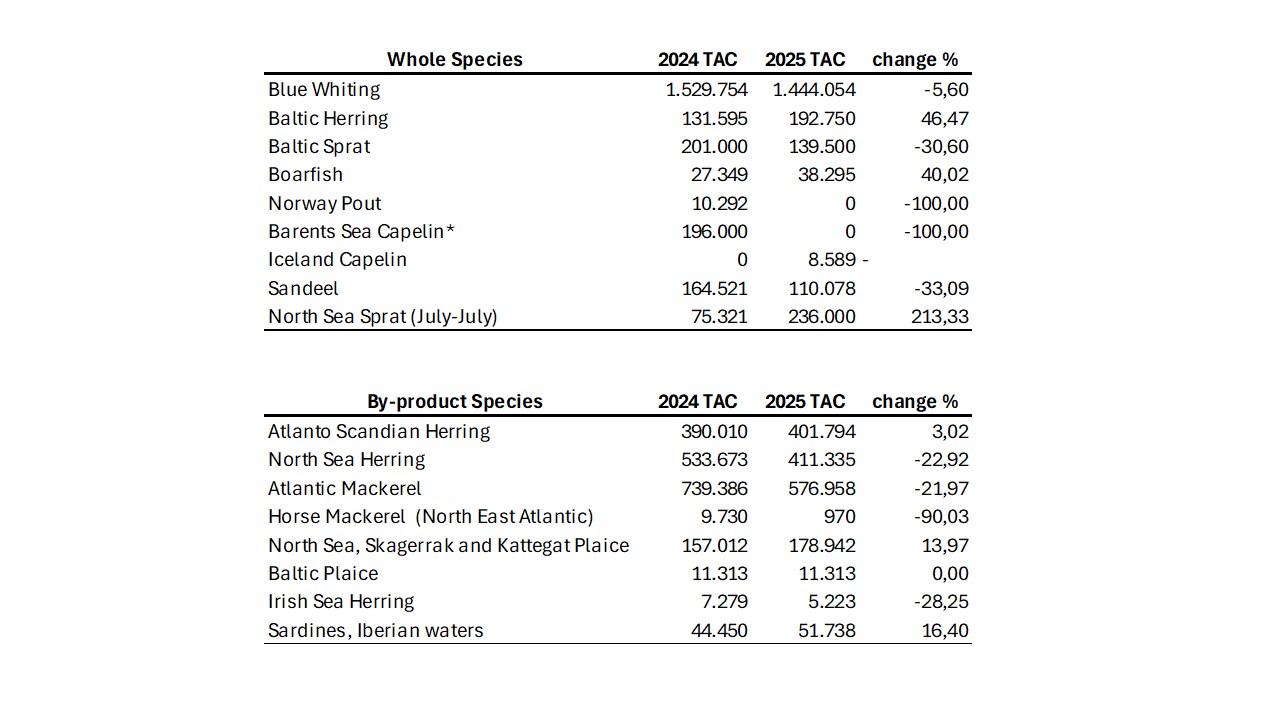
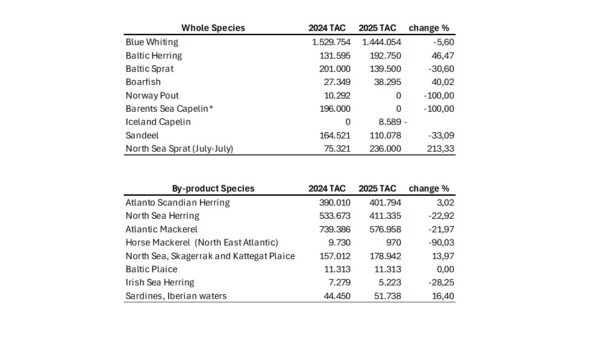
The table below summarises quota availability for 2025, based on the latest ICES scientific advice and the subsequent TAC decisions for both whole-fish industrial species and by-product categories. It provides an overview of how catch limits have changed compared with 2024, reflecting developments in stock assessments, environmental conditions, and management negotiations.
Biological Status of Stocks Based on ICES Advice 2025
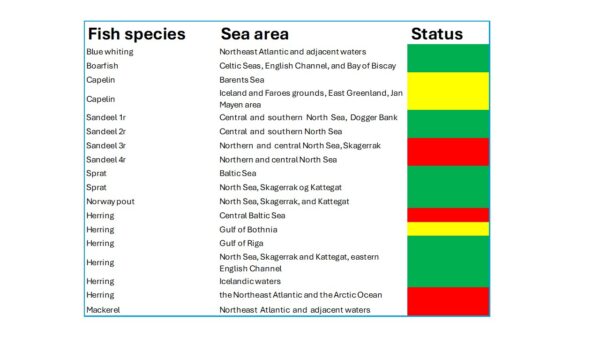
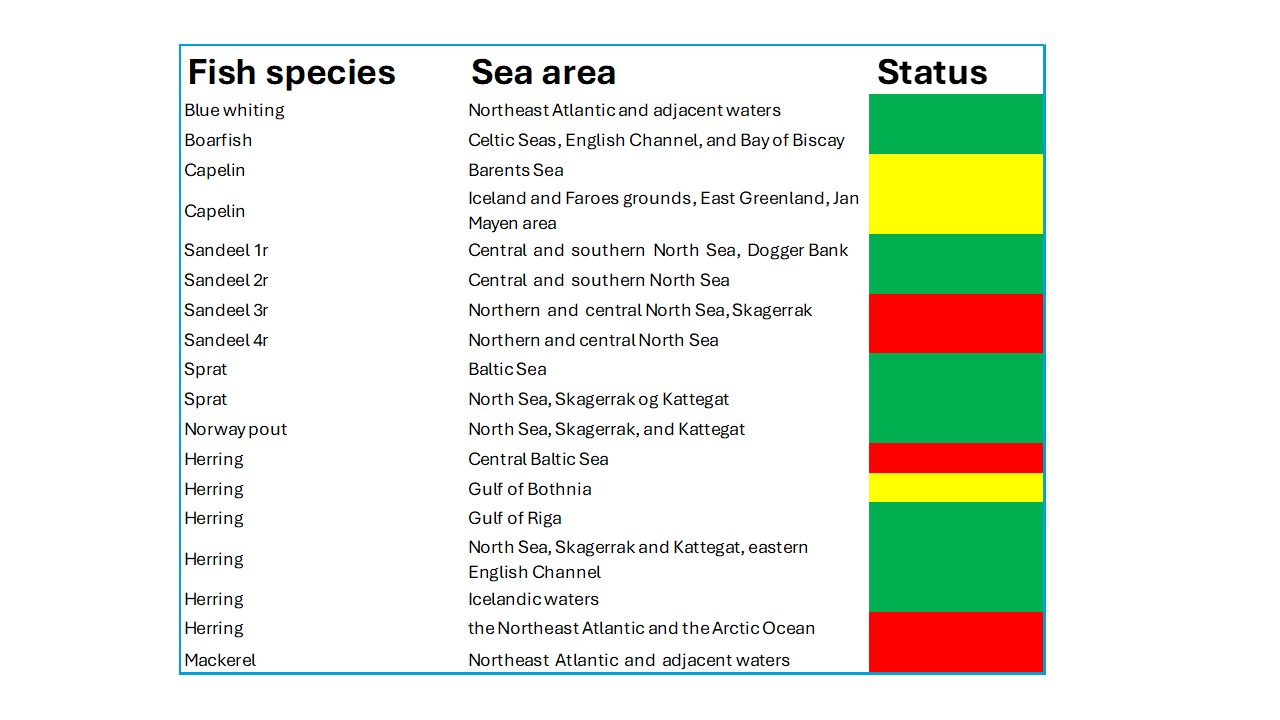
Understanding the biological status of fish stocks is essential for setting sustainable catch limits and ensuring long-term resource stability. The table below provides an overview of the current status of key stocks used in fishmeal and fish oil production, based on the latest ICES scientific advice (updated summer 2025). Stock status is evaluated against ICES precautionary reference points, with colours used to indicate the relative condition of each stock:
Green – spawning stock biomass above the precautionary reference point (Bpa).
Yellow – spawning stock biomass uncertain, variable, or in transition.
Red – spawning stock biomass below the precautionary reference point (Bpa).
These classifications give a concise snapshot of stock conditions across different sea areas and management units. As with all fisheries science, the picture is dynamic: some stocks show sustained recovery following years of precautionary management, while others remain sensitive to environmental pressures such as changing temperature regimes, altered plankton dynamics, or variable recruitment.
The table therefore reflects both areas of improvement—where stocks have rebuilt above precautionary reference points—and ongoing challenges, particularly for stocks whose productivity has declined or become more variable in recent years. Regular monitoring and repeated assessment allow management strategies to adapt to these shifts, ensuring that catch limits remain aligned with the best available evidence and long-term stock stability. More details can be found in this document