

The European Industry
Nutritional and Environmental Benefits
The Golden Standards of Animal Feeds: Key Nutritional Attributes
Fishmeal and fish oil provide a dense and highly digestible package of nutrients that are difficult to replicate with other feed ingredients. Fishmeal typically contains 62–75% crude protein, and its protein is well known for its high digestibility, often around 90%, which means animals can utilise it more efficiently than many plant or terrestrial animal proteins. This is particularly important for young or fast-growing animals, where efficient nutrient absorption directly influences growth and health.
Both fishmeal and fish oil are also distinguished by their content of long-chain omega-3 fatty acids, especially EPA and DHA. Fish oil is the richest natural source of these nutrients, and fishmeal contributes additional omega-3s through its 8–12% lipid content. EPA and DHA support immune function, tissue development, metabolism, and overall robustness in farmed animals.
A further advantage of fishmeal lies in its amino-acid profile. Animals require a set of essential amino acids that must be supplied through the diet, and fishmeal provides these in a well-balanced form that supports protein synthesis, feed intake, and growth. Its natural palatability also contributes to good feed acceptance across many species.
Marine ingredients also supply phospholipids, which are increasingly recognised for their high bioavailability and stability. These compounds support cell membrane integrity and metabolic functions, and their naturally high omega-3 content makes them valuable in both aquafeeds and specialised nutritional applications.
In addition, fishmeal and fish oil contain a broad spectrum of micronutrients, including key minerals such as calcium, phosphorus, magnesium, potassium, and selenium, as well as essential B-vitamins (B1, B2, B6, B12). These nutrients underpin metabolism, bone development, immune competence, and overall physiological performance. The high digestibility of marine ingredients means these micronutrients are readily absorbed, further strengthening their contribution to animal nutrition.
Environmental footprint
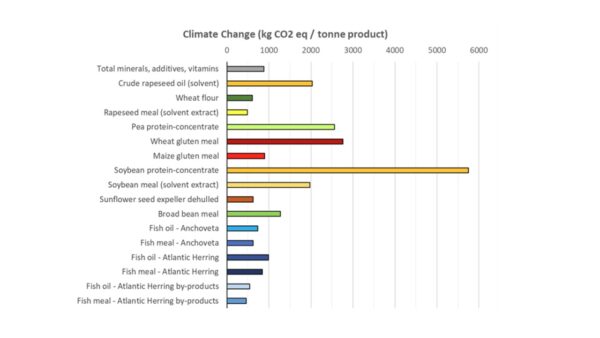
Across global feed formulation, the carbon footprint of individual ingredients is becoming an increasingly important consideration. As carbon accounting becomes more integrated into production systems, ingredients with higher emissions are likely to carry higher costs, while those with lower environmental footprints become more attractive to use.
Marine ingredients such as fishmeal and fish oil often have a lower carbon footprint per unit of digestible nutrient than many terrestrial alternatives. They require no land, irrigation, fertiliser, or feed inputs, and they make full use of resources that would otherwise be underutilised—particularly trimmings from fish processing. As carbon reporting becomes more widespread, these inherent efficiencies become more relevant.
At this juncture, EFFOP members have partnered with IFFO to support a global life-cycle assessment (LCA) mapping project for fishmeal and fish oil. This initiative will provide a consistent, science-based evaluation of the environmental performance of marine ingredients across regions and production systems. Such data will help ensure that carbon footprints are accurately represented and comparable with alternative feed ingredients. You can read more about the project here
As carbon pricing and sustainability metrics become incorporated into feed formulation, environmental performance will increasingly act as an additional criterion alongside nutrient composition, digestibility, and cost. This shift will help highlight and reward ingredients with genuinely lower environmental impacts.
Courtesy of IFFO