
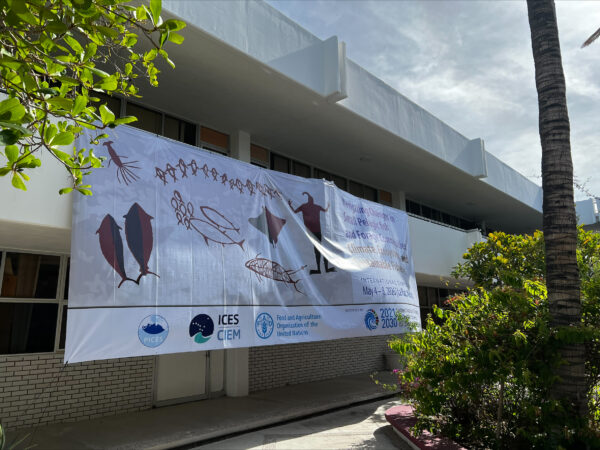


EFFOP Biologist joins ICES Working Group on Food Systems and Nutrition
EFFOP biologist James Hinchcliffe has joined the International Council for the Exploration of the Sea Working Group on Food Systems and Nutrition (WGFSN), contributing…
EU Activates EMFAF Crisis Mechanism
On 16 April, the European Commission activated the crisis mechanism under the European Maritime, Fisheries and Aquaculture Fund (EMFAF), enabling Member States to…
New BSAC and NSAC Advice: Management of Predators
As a member of both the North Sea Advisory Council (NSAC) and the Baltic Sea Advisory Council (BSAC), EFFOP welcomes the joint NSAC and BSAC advice on the management of predators…
The wait is over: EU-Mercosur Trade Agreement has entered into force
On 1 May 2026, the EU’s trade agreement with the Mercosur bloc, consisting of Argentina, Brazil, Paraguay, and Uruguay, provisionally entered into force, creating…
CFP Evaluation: A signal for change on burden reduction and aquaculture
As part of the European Ocean Pact, on 30 April 2026, the European Commission published its evaluation of the Common Fisheries Policy (CFP) Regulation, covering the decade…
EFFOP in Madrid: Outlook for the European Industry
On 28 April 2026, our CEO, Anne Mette Bæk, represented EFFOP at the IFFO The Marine Ingredients Organisation Members’ Meeting in Madrid. She shared perspectives on behalf…
EFFOP in Madrid: Outlook for the European Industry
On 28 April 2026, our CEO, Anne Mette Bæk, represented EFFOP at the IFFO The Marine Ingredients Organisation Members’ Meeting in Madrid. She shared perspectives on behalf…
EFFOP’s CEO: New Member of the NAPA Board
EFFOP is pleased to announce that our CEO, Anne Mette Bæk, has joined the Board of the North Atlantic Pelagic Advocacy Group, NAPA. NAPA brings together retailers, food…
Use of PFAS at a turning point in EU chemicals policy
EU regulation on PFAS is entering a decisive phase. A broad EU-wide restriction on the production, use and placing on the market of PFAS is moving forward towards adoption…Focus on fishmeal: key takeaways from FAO’s report on Responsible use of fishmeal in aquaculture
In the report Responsible use of fishmeal in aquaculture (2025) FAO explores how the fed aquaculture sector has advanced and improved the use of fishmeal as a feed source based on recent scientific and technological developments. The report highlights that the use of fishmeal in feed for aquaculture has declined over time, even though aquaculture production continues to grow. This suggests that the growth in aquaculture has not driven an increase in captured fisheries used…
PFAS in focus: New MAC advice reflects EFFOP priorities
The Market Advisory Council (MAC) has adopted new advice on per- and polyfluoroalkyl substances (PFAS), underlining the need to address contamination at its source…
Shaping 2040: EFFOP weighs in on the EU’s Vision 2040 for fisheries and aquaculture
EFFOP has submitted its contribution to the European Commission’s Call for Evidence on the Vision 2040 for Fisheries and Aquaculture. The Vision aims to establish a long-term,…
EFFOP participates in Ocean Stewardship Initiative discussions under the Sustainable Markets Initiative
From 10-12 March 2026, EFFOP’s Managing Director, Anne Mette Bæk, was formally invited to participate in a meeting with H.M. King Charles III and a roundtable session…
The devil is in the detail: new aquafeed research reveals hidden environmental trade-offs
Aquaculture plays a crucial role in meeting growing global demand for nutritious seafood. However, feed remains the dominant contributor to the environmental footprint…EU Zero Pollution Action Plan: Mid-Term Review Highlights Progress but Challenges Remain
The European Commission has published the mid-term review of the EU Zero Pollution Action Plan, assessing progress since the strategy was launched in 2021 and outlining priorities for the coming years. The review confirms that while encouraging progress has been made in several areas, significant work remains to meet the EU’s 2030 pollution reduction targets and the longer-term objective of a toxic-free environment by 2050. The Action Plan is a key pillar of the European…
The Societal Cost of PFAS Pollution: What New EU Study Shows
A new study commissioned by the European Commission sheds light on the growing societal costs associated with PFAS pollution in Europe. The report, The Cost of PFAS Pollution…
New research highlights limited visibility of fisheries in biodiversity planning
A new study published in Biodiversity and Conservation highlights concerns among fisheries stakeholders regarding the limited visibility of fish and fisheries issues…
EFFOP responds to the European Commission’s call for evidence on the Revision of the Marine Strategy Framework Directive
From 15 December 2025 to 9 March 2026, the European Commission has launched a call for evidence on the revision of the Marine Strategy Framework Directive (MSFD). The revision…