New research highlights limited visibility of fisheries in biodiversity planning
2026.3.9
A new study published in Biodiversity and Conservation highlights concerns among fisheries stakeholders regarding the limited visibility of fish and fisheries issues within current biodiversity planning under the Convention on Biological Diversity (CBD).
You can download the paper by Newton Friedman et al. 2026 here
The research analysed 182 National Biodiversity Strategies and Action Plans (NBSAPs) using text analysis techniques to examine how aquatic ecosystems and fisheries-related topics are represented in national biodiversity policies.
Fisheries underrepresented in biodiversity strategies
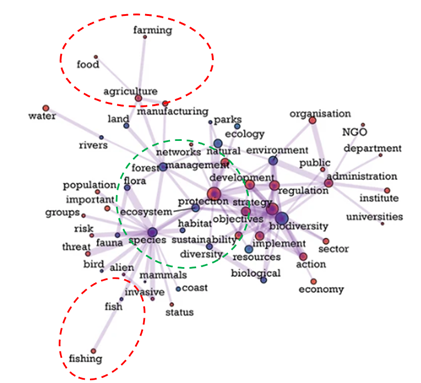
The results show that keywords related to fisheries, fish and fishing appear far less frequently alongside conservation and intervention terminology compared with other ecosystem topics. This pattern suggests that fisheries management is not being sufficiently integrated into biodiversity strategies, potentially limiting the effectiveness of conservation efforts for aquatic ecosystems.
Network analyses of the policy documents further revealed that fisheries-related terms are weakly connected to key governance concepts such as “protection”, “strategy” or “regulation”. By contrast, terrestrial terms such as “forest” are strongly linked to biodiversity and management discussions.
This indicates that fish-related issues may receive less attention in biodiversity policy discussions and investment priorities.
Strong focus on spatial protection measures
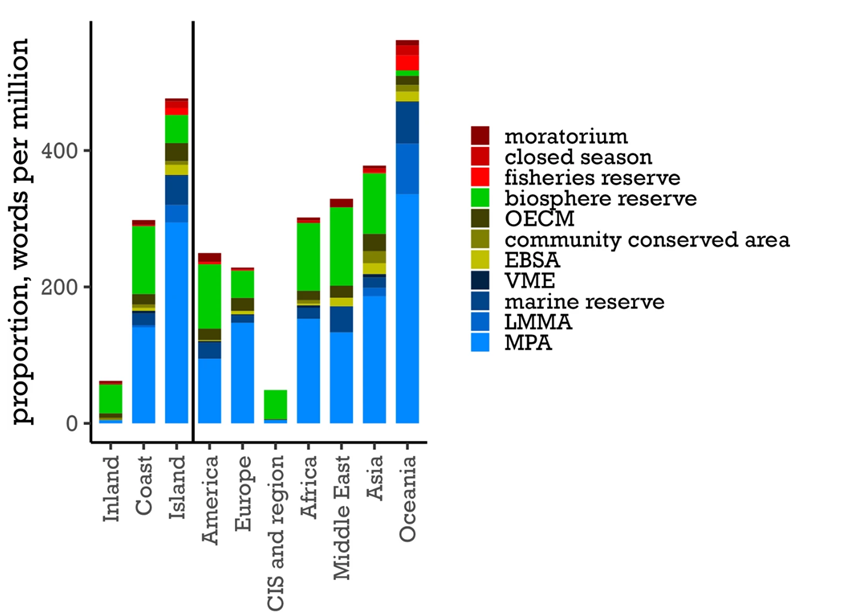
The study also highlights an imbalance in the types of conservation measures discussed in national plans. Spatial management tools—particularly marine protected areas (MPAs)—are the most frequently mentioned intervention.
Other approaches, including area-based fisheries management tools and “other effective area-based conservation measures” (OECMs), appear much less frequently. At the same time, biodiversity plans show a strong emphasis on overfishing while comparatively overlooking other major stressors affecting aquatic ecosystems, such as ocean warming, acidification and pollution.
A tool to identify policy gaps
The researchers used a transparent text-analysis method to rapidly assess the focus of biodiversity policy documents. By examining keyword frequency and co-occurrence, the approach provides a broad diagnostic view of how conservation priorities are represented in national plans.
Such tools can help identify mismatches between national biodiversity strategies and global frameworks such as the Kunming–Montreal Global Biodiversity Framework.
A call for stronger fisheries engagement
For fisheries stakeholders, the findings underline the need to advocate more strongly for the meaningful inclusion of fisheries considerations in biodiversity policies.
Given the central role of fisheries in food security, livelihoods and ecosystem management, ensuring that fish and fisheries are fully integrated into biodiversity planning will be essential to achieving the CBD’s objectives of conservation, sustainable use and equitable benefits from biodiversity.