EFFOP at the North Atlantic Seafood Forum: Key Pelagic Stocks Management Remains a Strategic Priority
2026.3.6
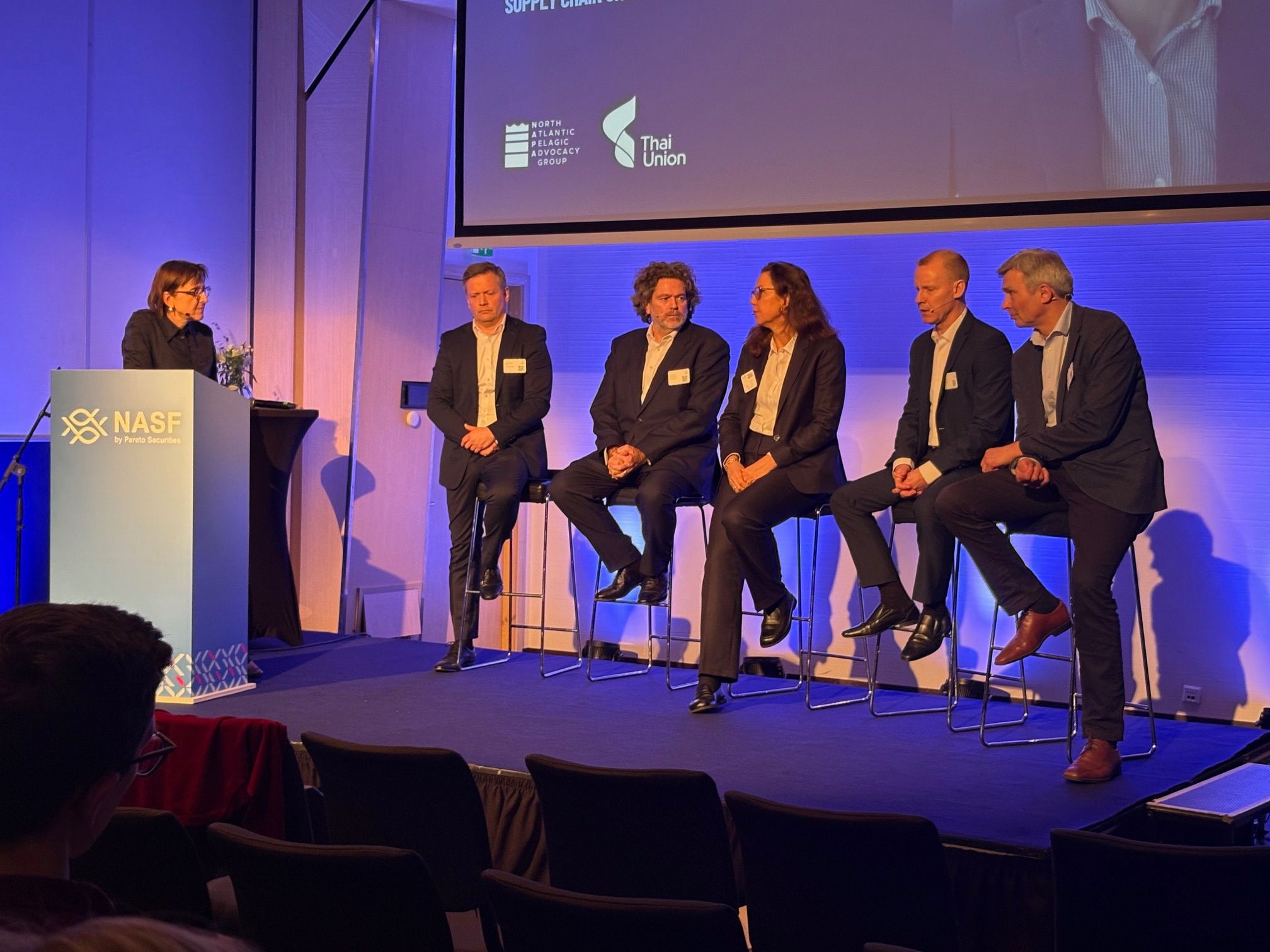
EFFOP’s CEO, Anne Mette Bæk, participated in the North Atlantic Pelagic Advocacy Group session at the North Atlantic Seafood Forum in Bergen on 4 March. The session focused on the consequences of continued political inaction on the management of key pelagic stocks, including blue whiting – so essential for the European aquaculture value chain.
The supply chain depends on stable and responsibly managed pelagic resources and this is severely compromised by the lack of agreement among coastal states on a fair sharing arrangement and the expected loss of certification.
EFFOP’s Role in the Blue Whiting Value Chain
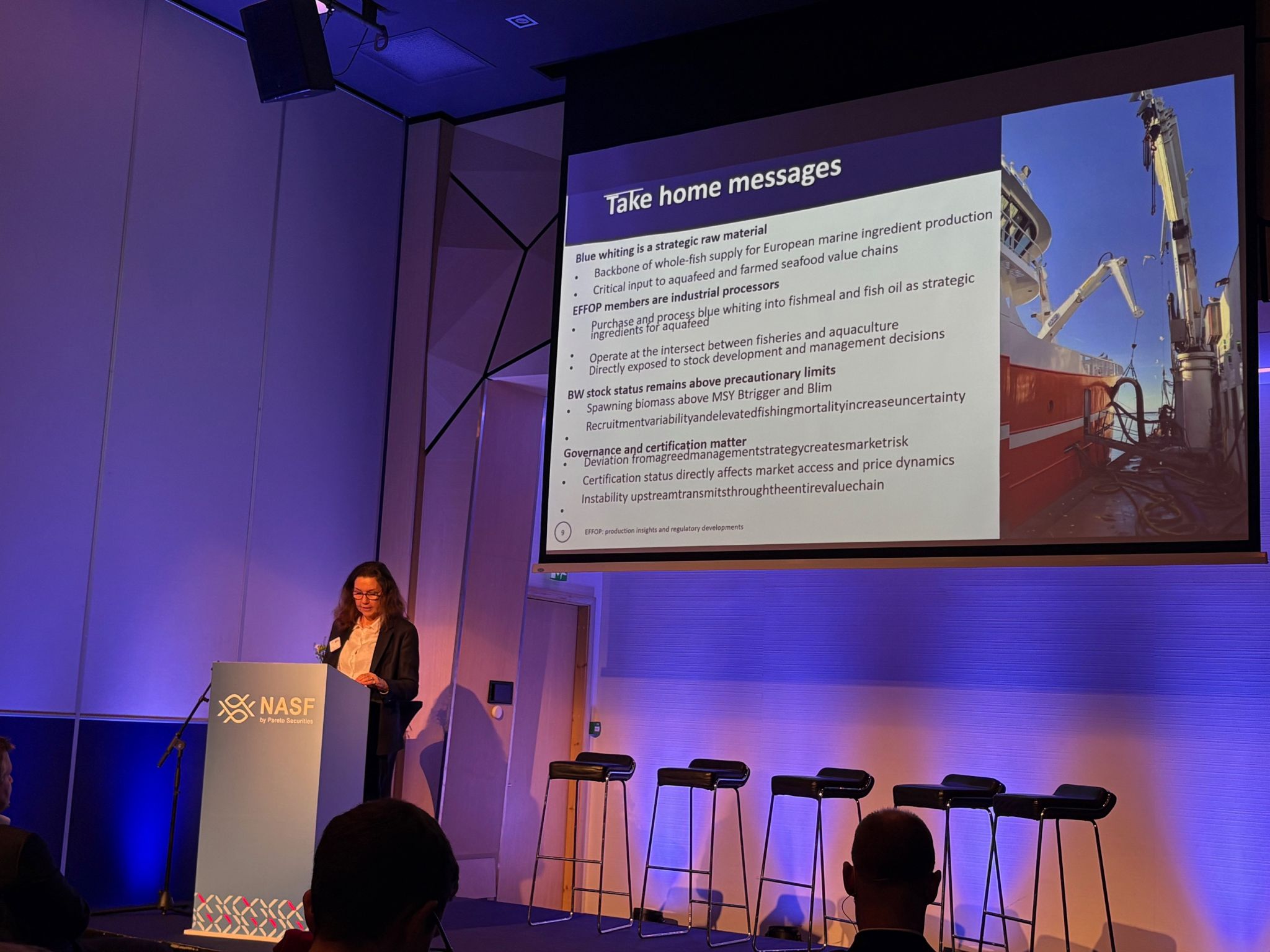
EFFOP members purchase and process blue whiting into high value marine ingredients used in aquafeed production across Europe. Decisions on stock management therefore directly influence:
- Availability of raw material
- Total production volumes
- Certification status and access to global markets
- Price formation in marine ingredient markets
Blue whiting remains the backbone of whole fish supplies for European fishmeal and fish oil production. There are only limited alternative protein sources that can match the nutritional value and climate performance of fishmeal and fish oil.
The Market Impact of Certification Loss
If certification is lost, the consequences will be felt throughout the value chain. Access to certified market segments will be reduced for feed producers leading to increased demand for certified ingredients. At the same time blue whiting marine ingredients may be redirected toward other market segments.
Stock Status and Management
The blue whiting stock currently remains above precautionary reference points, with spawning biomass above MSY Btrigger and Blim. However, variations in recruitment and increased fishing mortality continue to create uncertainty. Stable governance and responsible management is essential.
Certification and management frameworks play a central role in ensuring market stability. When management deviates from agreed strategies, risk increases for all operators. Upstream instability in the fishery quickly spreads through the supply chain, affecting both processors and aquaculture producers.
A Call for Political Leadership
During the session, Anne Mette Bæk emphasised the need for renewed commitment from policymakers:
“The continued absence of a coastal states agreement is not an abstract governance issue. It directly affects raw material availability, price stability, investment certainty, and ultimately the competitiveness of Europe’s marine ingredients and aquaculture sectors. We urgently need political leadership and a workable agreement.”
For EFFOP members and the wider aquaculture sector, blue whiting remains a critical resource. As industrial processors operating between fisheries and aquaculture, EFFOP members are highly exposed to decisions on stock development and management. A stable, well governed fishery is therefore essential for securing sustainable growth and maintaining Europe’s position as a global leader in aquaculture production.